
TAVR Research Updates: What the Latest Studies Reveal About the Future of Valve Replacement
APRN World · August 17, 2025 · 2 min read
Introduction
Transcatheter Aortic Valve Replacement (TAVR) has transformed the treatment landscape for aortic stenosis, evolving from a high-risk-only procedure to a widely adopted intervention for patients across all surgical risk categories. As new research emerges, cardiologists, advanced practice providers, and patients are gaining deeper insight into the long-term safety, durability, and expanded uses of TAVR. Here's what the most recent studies reveal—and why these updates matter for clinical practice.
TAVR Durability—10-Year Data Coming Into Focus
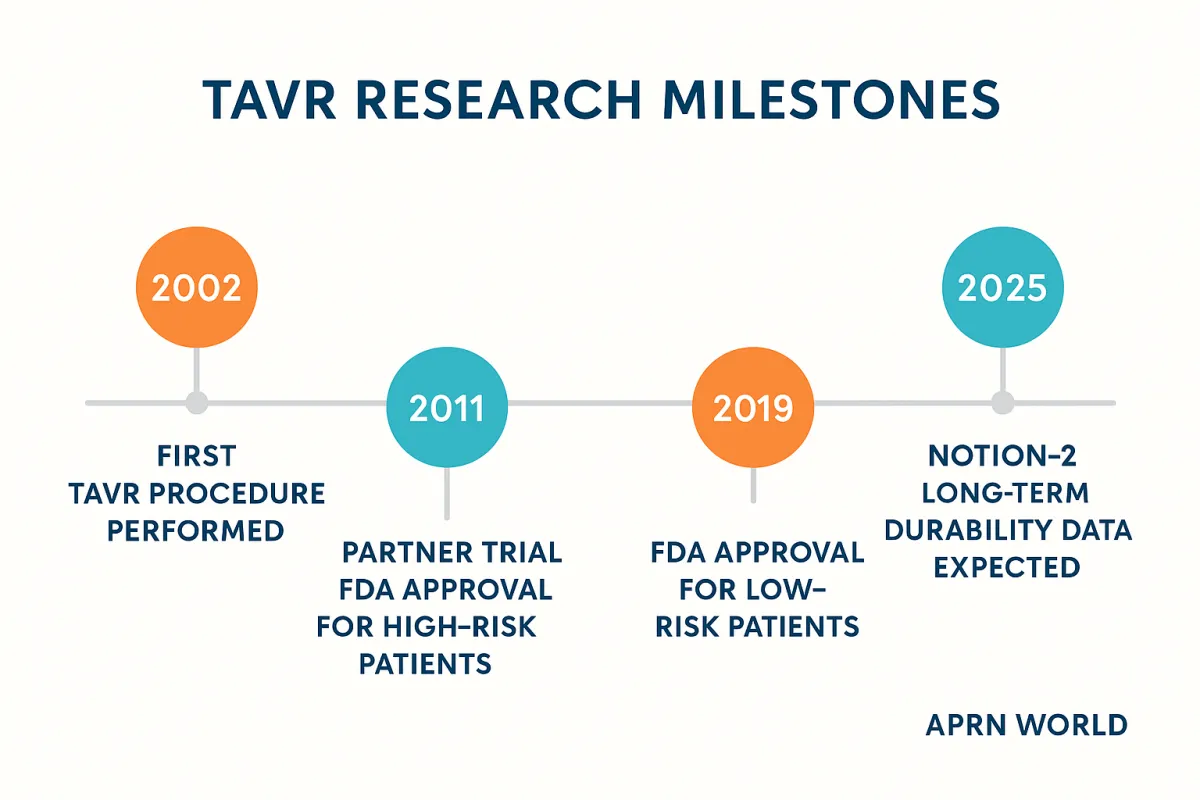
Early skepticism about TAVR centered on how long the transcatheter valves would last compared to surgically implanted valves. Recent 10-year follow-up data from the PARTNER 1 trial show encouraging durability, with structural valve deterioration rates comparable to Surgical Aortic Valve Replacement (SAVR). These findings support TAVR as a viable option for younger, lower-risk patients.
Expanding Indications Beyond Aortic Stenosis
New research is exploring TAVR for conditions beyond calcific aortic stenosis, including:
- Pure aortic regurgitation in selected anatomies
- Bicuspid aortic valves (once considered challenging due to asymmetric anatomy)
- Valve-in-valve procedures for failing surgical or transcatheter valves
FDA approvals and professional guidelines are gradually expanding as trial evidence grows.
Stroke and Pacemaker Rates—What's Changing?
Recent device iterations and procedural refinements have lowered the incidence of periprocedural stroke and the need for permanent pacemakers post-TAVR. Ongoing multicenter trials are evaluating predictors of conduction disturbances and refining patient selection.
TAVR in Younger Populations
Traditionally reserved for elderly patients, new registry data show low-risk patients under 65 can achieve excellent early and mid-term outcomes with TAVR. However, durability data beyond 10 years are still pending, so SAVR may remain preferred for certain younger cohorts.
Quality-of-Life Improvements
Several randomized trials report faster recovery times and better early quality-of-life scores for TAVR patients compared to SAVR, especially within the first year post-procedure. These benefits often translate to earlier return to daily activities and reduced rehabilitation needs.
Ongoing and Upcoming Trials to Watch
- PARTNER 4 – Focusing on TAVR in asymptomatic severe aortic stenosis
- NOTION-2 – Long-term TAVR durability in low-risk patients
- Evolut Low Risk Bicuspid Study – Safety and efficacy in bicuspid anatomy
- Early TAVR—Investigating earlier intervention before symptom onset
Conclusion & Clinical Implications
TAVR has matured from a last-resort option to a first-line therapy for many patients with aortic stenosis. With durability data extending beyond a decade, device technology rapidly improving, and expanding indications, TAVR is poised to become the standard for a broader range of patients. Staying updated on ongoing research is essential for optimizing patient outcomes and making informed procedural choices.
Stay ahead in your cardiology practice—join APRN WORLD's evidence-based Cardiology CEU Courses to keep current with the latest TAVR guidelines, trials, and best practices.
Turn this into CE hours
Explore accredited courses on this topic and earn contact hours toward your renewal.