
Cardiopulmonary Bypass: Essential Knowledge for Advanced Practice Nurses
APRN World · August 17, 2025 · 2 min read
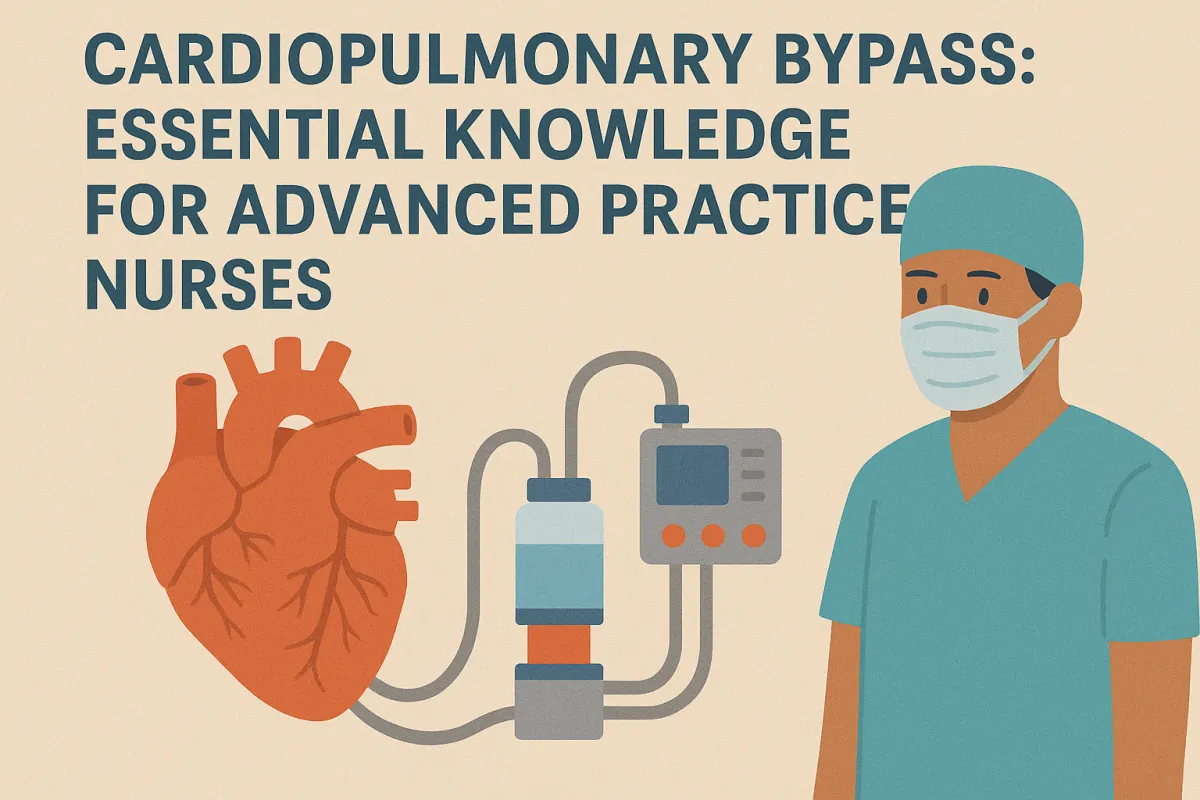
Cardiopulmonary bypass (CPB) is one of the most important innovations in cardiac surgery, enabling surgeons to perform complex repairs on a still, bloodless heart while maintaining oxygenation and perfusion to the rest of the body. For Advanced Practice Registered Nurses (APRNs) and other advanced practice providers, understanding CPB is crucial for perioperative care, complication recognition, and patient education.
What is Cardiopulmonary Bypass?
CPB involves diverting blood from the patient's venous circulation into a heart-lung machine, where it is oxygenated and returned to the arterial circulation. This allows the surgical team to temporarily stop the heart (cardioplegia) for valve repair, coronary artery bypass grafting (CABG), or congenital heart surgery.
Key CPB components include:
- Venous cannula (to drain deoxygenated blood)
- Oxygenator (to exchange oxygen and carbon dioxide)
- Pump (to maintain flow and perfusion)
- Heat exchanger (for temperature regulation)
Clinical Considerations for APRNs
1. Hemodynamic Monitoring & Support
Pre- and post-bypass periods require meticulous monitoring of blood pressure, cardiac output, and tissue perfusion. APRNs play a pivotal role in recognizing trends that may indicate low cardiac output syndrome, bleeding, or arrhythmias after weaning from bypass.
2. Anticoagulation Management
Systemic heparinization is necessary to prevent clotting in the bypass circuit. APRNs involved in cardiac care must understand heparin dosing, ACT (activated clotting time) targets, and reversal with protamine.
3. Inflammatory Response Awareness
CPB can trigger a systemic inflammatory response, contributing to postoperative complications like vasoplegia, coagulopathy, or organ dysfunction. Early recognition and multidisciplinary interventions are key.
4. Neurologic & Renal Protection
APRNs monitor for signs of stroke, delirium, and acute kidney injury, common risks in the post-bypass period. Evidence-based strategies, including optimizing perfusion pressures and minimizing aortic manipulation, can help reduce these risks.
Future Directions in CPB
The future of CPB involves:
- Minimally invasive extracorporeal circuits with reduced prime volume to minimize hemodilution.
- Biocompatible coatings to decrease inflammatory activation.
- Hybrid approaches combining CPB with transcatheter techniques for complex cardiac disease.
The APRN Role in Education and Patient Outcomes
For APRNs, understanding CPB is more than academic—it's a patient safety imperative. From pre-op counseling to post-op ICU care, advanced knowledge empowers APRNs to anticipate complications, coordinate multidisciplinary interventions, and improve recovery timelines.
APRN WORLD offers cost-effective, visually engaging, and clinically relevant continuing education modules on cardiac surgery, CPB fundamentals, and postoperative care. These CE programs prepare APRNs to excel in high-acuity settings and contribute meaningfully to surgical heart teams.
Turn this into CE hours
Explore accredited courses on this topic and earn contact hours toward your renewal.